Carta de
Huitzilopochtli
Every day you have to know I’m up here
On the banks of the Greater Miami fighting
The gringos: I am one of those men
You called forth in one of your poems. And because
I live so close to them, I can taste their greed when I eat,
When I break bread at daylight, sitting
In a clapboard Dutch-roofed farmhouse
That overlooks the oak-lined street.
Listen: this morning I drove my son
To school. I thought of the war, I looked
In vain for any other dark haired heads
Like mine stumbling through this wicked
Part of Ohio I never imagined in my little
Desert home. My son’s eyes tell me I am there
And otherwise a part of a greater nomadic urge—
To leave the Chihuahuan wastelands forever in search of water.
When my mother was
41 years old, in 1976, my family drove up to Chimayo New Mexico so that she
could fulfill a promise she had made to La Virgen de Guadalupe in 1968, when
she almost died giving birth my sister Ysela.
She would crawl on her knees to the main alter at the main chapel in
Chimayo. She did it, even though she was
embarrassed and in pain. She was
scared, you could tell. All of the
tourists. The old Franciscan priest and
some monks from a Buddhist monastery in Taos.
I as well, suffering from what
were the beginnings of my life-long battle with Moerch-Woltman Syndrome, was
taken to a holy site there at the chapel when the dirt itself was said to cure
the afflicted. Crutches and canes
everywhere, I rubbed the red dirt on my leg, to no effect.
Now, when I think
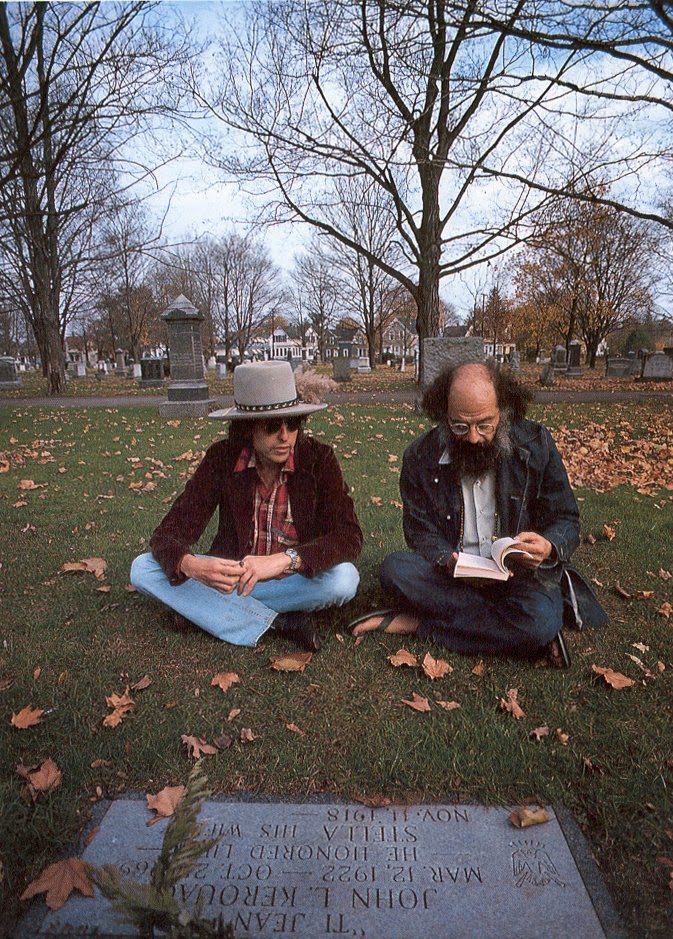
of pilgrimages, I immediately think of Allen Ginsberg’s travels to San
Francisco with Jack Kerouac. A place
they considered divine and full of possibility, a place where they would begin,
reinvent themselves, and prosper. I
think of Ginsberg sitting in his Berkeley apartment hallucinating Blake, seeing
roses in the walls. I see Kerouac
looking for “visionary angels who were visionary angels.” I am also drawn to
the Children’s Crusade, for some reason.
I remember a poem I wrote in 1987, in Jon Victor Anderson’s poetry
class, an allegory using that particular crusade to highlight the tensions I
was living through as a young writer whose main themes focused, and continue to
focus on escape and transcendence. But
the Crusade was not an escape, as much as a meaningless pilgrimage, and I felt
that meaningless living in Tucson, there, at the time. I had become a nomad, making pilgrimages to
distant desert ivory towers to learn how to write, and to escape another
desert. Every step forward that day I
left Albuquerque was the beginning of a pilgrimage away from who I was to what
I wanted to become. I wanted to find my
inner holy self, I wanted find someway of being that would help my shattered
soul. In the desolation, I laid out a plan to move away as far as I could, and
I would consider now that a venture to the boreal woods and temperate zones was
in order. On one trip to Boston and
Vermont in 1991 I had pretty much decided that I needed to leave the desert
forever, leave my connections behind, and forge a path, make a pilgrimage to
these grand woods and rolling hills.
I grew up in Gallup and Albuquerque New
Mexico. My father’s family is mainly
Tejano, that is, an ethnic mix of Spanish, Basque, German, and Czech. My mom’s
family is mostly Mexican and Apache. When I was growing up I always saw many
Americans coming to the Southwest, pilgrims, tourists, wanderers, mystics,
travelers traveling through the Native sites and Pueblos, the Ruins, the small
towns in Dinetah, looking for something.
Spiritual. Forgiving. Awesome
like the blank blue sky and the transient and almost non-existent weather. But when you’re 20, 21, maybe you want to
leave. Maybe your relationships have
dried up. Maybe you’ve seen your friends
turn to the darkness. You’ve had it with
the way things turned out for most of you after high school, during and after
college. Stuck in New Mexico, forever, maybe. Maybe for all its light, the desert is a
darkness so complete it’s a dry black hole filled with scorpions and snakes and
the never ending sun. You see this in
all of your friends, the kids with whom you went to High School and
college. I think about who made it out,
who stayed. To me the desert is
devastation. I chose to leave, to make
my way to the East, to the green lands and forests I had only seen once or
twice. But there are the experiences
that brought me here now, living in temperate America, to walk in the holy Oak
and Maple forests, to walk in the dead of winter through a copse of silver
maple and dogwood. The stunning sight of
hard winter snow in the woods, the rabbit and bobcat tracks. I don’t want to call it my heaven or my
ultimate destination. But it is
enough. As if I have walked one thousand
miles in bare feet to get here. I feel
as if I have made to an older holy place, a place of ghostly forests and
sweeping cornfields that speak to me of life and possibility.
* * *
These
are the stories of the desert, the place I wished to leave. Unholy and destructive, I always wanted to
leave. My brother always said he could
tell by the time we were six that I wanted to leave, to walk as far as I could
away from what I knew to some holy land.
There were other pilgrims too who found the dry Western woods, conifer
and Scrub Oak, to be somehow soothing.
We all made pilgrimages to the mountains, like the Jack and Allen and
Gary, hoping find enlightenment and desolation.
Collin and Harold
were best friends, since 7th grade, when they met at Hoover Middle
School in Albuquerque, New Mexico. My
brother and I met them in 9th grade Algebra 1. They played dungeons and dragons, read
sci-fi, wore Levi Big Bells and ratty t-shirts and work boots. Collin smoked Marlboro 100’s constantly when
we were out of class, at lunch, whenever, wherever. Harold knew a lot about computers: his dad
worked at one of the DOE labs in the city, and they had built HeathKit/Zenith
pcs by 1983. And of course, we all knew
Basic and Fortran. Soon, Harold had
programed his computer like a video game, albeit primitive by today’s
standards. In a chessboard like setting,
we could play Dungeons and Dragons on the computer, which also had a random
number generator so we wouldn’t have to roll dice. Mostly, I remember partying a lot with these
two in 12th grade. Collin’s
dad made awful, yeasty, 14% grape wine, which he called “Cloud 9 Wine.” There were jugs of it in the garage. Cigarettes and pot were also popular. At lunch, we’d drive up to the edge of the
foothills, smoke up, get some burgers at McDonalds, and head back. No one cared.
We were seniors, all going to college, smarmy-bright nerdy freaks who
listened to Led Zeppelin, Pink Floyd, the Beatles, and the Stones. Since Collin was also in the Theatre group
and was quite the young actor, I met many new people, who were more like me in
sentiment and intelligence. It was all
good. But as I remember now, all the
songs we listened to, about vast other worldly realms and places unknown, about
places in the mind deep and scary and revelatory, haunted all of us. The need to escape.
Collin
and Harold chose to go to New Mexico State University on scholarships: Harold for Math, and Collin for Art and
Theatre. Of course, I was, like my
brother, bound for the University of New Mexico: I won a scholarship, and with loans and work
study, I decided to make the best of it.
I have to admit that my First year is a blur of parties, involving all
of those theatre people, some of whom were a year behind us, but in some ways,
much heavier partiers, much darker emotionally, too. For them, there were no pilgrimages, as they
could journey into the minds of other people and kinetically transfer those lives
to the stage. There was some kind of
stability to that and I did not have it.
I saw them as static as much as I moved around, never secure, always
wanting to leave to someplace that did not exist.
It was at this
time that Collin and Harold, bored with life in Las Cruces, NM, used to travel
back up to Albuquerque. But there was
something new: Harold had a girlfriend, Susan,
who had gone to Manzano High School, who was always with him, even when Collin
was around. So when these three would
show up, there was tension in the air, even at the kindest parties. Let’s just say it was a tumultuous time. A wild time in the early 80’s when sexual
promiscuity, drug and alcohol abuse were just fine for everyone. I have to note here that the ultimate forms
of escape were mostly just there, for the taking. No one I know wanted to live the life they
had, no one wanted to go home, or even go on sometimes. Deep escapes became the norm: all day hiking followed by all night beer
drinking, heavy use of hard liquor and strong cigarettes, random hookups that
lasted the night.
Because
we had all grown up in sight of or even right next to the great Sandia
Mountains that rise almost 5000 feet from the plain of the Rio Grande, which
floats serenely at 5600 feet above sea level, we had become very good to
excellent hikers, mountain climbers, boulderers, and scramblers by the time we
were 19. We’d spent our younger years in
Boy Scouts and thought we knew the woods like we knew every little corner of
our small but growing minds. By that I
mean that most of us were convinced we were invincible, proud, determined to
succeed, and determined to be masters of the forest and mountains. There were the big Friday night parties in
Sunset Canyon, part of the Ponderosa National Forest, right behind Tom
Alexander’s house, usually after the long 8-10 mile hikes that also involved
climbing boulders and so forth. Beer,
whiskey, and pot were common, but Tom, who was a math major set to go to Berkeley,
along with Collin, Harold and Susan, had started to delve into
hallucinogens: LSD, Psyllocybin
Mushrooms, even, of all things, Datura, or Locoweed, called such by the local
ranchers because of what it did to cattle when they ate it. Of course we know now know that hallucinogens
are the most dangerous form of escape, and in the past could be associated with
a rite –of-passage or a pilgrimage into an unknown from which you might not
return. But some of my friends were
ready for that. After all, our favorite
bands sung of pilgrimages to far off lands, and the sci-fi and fantasy stories
we read convinced us that our lives were journeys to be filled with pilgrimages
into the unknown.
By
this time, Collin was dating Jessica Roybal, a Chicana from Truchas, NM. She had thick black hair and a sharp native
face. We’d often talk in Caló when we
hung out. She liked to smoke menthols
like me, and even worked at the same place I did, as a lighting tech. But now
this group of four still liked to go into the deep, deep, high desert outside
of Las Cruces to hike and climb, to test their skills and to dose up on LSD or
Mushrooms. They favored the Organ
Mountains, which lie directly East of Las Cruces. Jagged and dangerous compared to the Sandias. They in fact, preferred the Wilderness Areas
on the East side of the mountain, where one could encounter waterfalls, rushing
streams, and animals like cougar, coyote, or antelope.
What
I know of the rest of the story comes from Jess and my brother, who was told by
Collin. One early morning, the guys got
up to do some early pre-dawn hiking.
They left Susan and Jess back in their tents. About an hour later, Collin returned. He was white-faced and covered in dirt and
dust. According to Jess, and to my
brother, Collin and Harold had each dropped several hits of LSD early that
morning, and having not slept, decided to go scale a 65 foot rock tower that
lead to a higher plateau. Collin reached
the summit first. As Harold climbed
behind him, he grasped onto a large loose rock, which broke from the mountain
ledge, sending him tumbling 65 feet to the ground. The rock, at least 50 pounds, landed on Harold’s
chest and throat, crushing his windpipe.
They say Collin carried Harold all
the way down the mountain after he got back to camp, alerted the women, and
tried in vain to rescue him. Jess ran
all the way down a dirt road for two miles in her army boots until she found a
state cop who called in a helicopter rescue team from Ft. Bliss.
I
found out about this one early morning.
I was back at my parents’ house to get laundry done early on a Monday
and then drive back to campus in my busted up 1978 Ford Bronco in time for my
11 am class. The radio was on. It was about 7 am.
Very simple. A New Mexico State University Student had
received fatal injuries in an unlikely and bizarre accident, what one calls a
freak accident. Crushed windpipe while
climbing in the Organ Mountains. And
then his name.
It
was the middle of April 1984. We were
all packing up our dorms to move into the student neighborhood next year (at
UNM we have a student ghetto too, but it is, much more, shall we say, run down
and dangerous). I called my brother in
his room—he was incredulous and disbelieving…I had hooked up with Harold’s
sister once at a party the summer before, and Rudy and Harold resented for that…anyway,
I told him I was on my way back to the dorms, to Coronado Hall, where he and Gabe
Greenfield lived. I got in the
Bronco. It had no radio, so I had taken
a GE boombox and plugged it to the cigarette lighter for music. I
ran a couple lights, stunned, in a hurry, taking older routes down to the U so
I could think. There was a Billy Joel
song on the first station I tuned to:
“for the longest time,” a silly 1950’s do-wop style song, sweet and sick
like candy. For years I would associate
this song with this horrible series of events.
Upon
entering Rudy and Gabe’s dorm, I knew that Rudy had heard the news on the radio
too and Gabe was crying quietly in the corner. After that, who knows. There was no memorial service in Albuquerque,
as Harold’s parents’ bundled his remains and buried him in Grand Rapids,
Michigan, in a family plot. Susan
totally disappeared, never to be seen by us again.
About
a year after the accident, Collin and Jess were living in Albuquerque, both now
going to UNM instead of NMSU. They had
to get away. Collin began to make all
sorts of carvings, pipes, and art objects from clay, rock, wood, anything he
could shape and remake. They were
remarkable, organic and solidly ingenious in artistic design. But as his art went on, his images more and
more focused on faces and images of death.
Collin liked to sit in his very nice hardwood floor apartment from the
1940’s watching his enormous fish tank.
He would mold, carve, cut, shave, break, remake so many pieces of art,
each about hand-sized, that he sold them for $5 each at the Albuquerque Flea
Market on Saturdays. At one time he had
over 200 art objects that he’d made, and was making about $200 each week
selling them to tourists and oddballs. I
was working, in my senior year, at Keller Hall on the UNM campus as a lighting
tech. Jess worked there too. We shifted and moved lights, heavy cables,
and used equipment from the 1960’s to light Keller Hall for concerts performed
by the Music Department faculty and students. Mostly she and I sat in the
Director’s booth behind the audience, turning lights off and on, softly talking
in the dark about Collin, the weight he bore, how she couldn’t stand it. We spoke mostly in Caló. We would get really stoned and then talk
about astronomy stuff: the planets, the
stars, the possibility of life. We had
both begun dreaming of the ultimate pilgrimage, death, which we discussed
allegorically, in terms of outer space and far out planets that might exist
somewhere out there in the dark. After
work I would stare up into the dark and the nomad would call to me. And I heard the Eastern forests singing in my
ears.
* * *
In 1987 I lost
track of all of those people. I moved
with a woman I had known for two years to Tucson, Arizona, to attend the
fabulous Graduate Creative Writing Program.
Rolling Stone said it was the place to hone your skills as
a young writer. I was also another
escape, as I was actually going somewhere
different and new. There was the
notion of the student going to learn from the
masters, the wonder boys from Iowa who had moved to the mystic west to
improve their writing. My plan to was to
learn from them and move East.
Tucson,
1987. I lived in a concrete and stucco
apartment, one of “Las Casitas Viejas,”
an apartment complex near the University of Arizona. Six little four room boxes surrounding an old
round dark green Juniper tree. It was
never my intent to move, like a nomad, from desert to desert, but that’s what I
did for the next six years. I lived with
Sarah, and we lived across the way from Mike Vinyl, a local radio dj and Elvis
worshipper. From Mike we learned about
hard drinking and from the windows late at night I’d watch his friend, “Cotton,”
freebasing cocaine. Afterwards, he would
sit on Mike’s porch drinking 151 and Doctor Pepper, while Mike smoked Marlboros
and drank gin…I think, whatever Elvis drank, no doubt.
I
thought I was beginning my pilgrimage as a writer, as a poet. Instead, this phase of my self-exile would
bring me down a trail I never intended.
There was a darkness that each of us touched in one another. Like playing at keeping house we were lost
bohemians who were trying to find a way out, but there were no plans for after
graduate school. We’d made the mistake many
young hipsters make, confusing sex for love, wanting out of loneliness only for
some company, somewhere. But there in
grad school I encountered the second darkness:
the back-stabbing, airy and elitist world of the Writing Program, with
its dilletantes, wannabes, true-believers, crazy, drunken geniuses, losers,
geeks, and desert rats. That they seemed
to be all rushing somewhere unknown at the guidance of their teachers worried
me. That alcohol, weed, tobacco, and
sometimes cocaine flew freely at wild after-workshop parties numbed me. After a while, there were only a couple
people I’d talk to. I wrote my poetry
but mostly stayed away, working as a research assistant for an Education
professor, Carl Foster, Ed.D, who worked with the BIA School in Tuba City,
Arizona. I learned more there and
working with him in some ways than I did from my writing teachers. I took the outsider classes, like the
Southern Arizona Writing Project, and worked with High School teachers who
taught mostly indigenous peoples, Dine, Tohono-Odham, San Carlos Apache. In Spring 1988 I dropped out from the Program
without informing anyone.
In
the Summer of 1988 I moved with Sarah to Alamosa, Colorado. There are no pictures of those days; they’ve
been destroyed by various parties who thought they were, at the time, immune
from regret and shame. This was no
adventure: there was already a lingering
tiredness to the way Sarah dealt with me, how she approached me. We had both undertaken this pilgrimage to a
promised land of permanent jobs, a new life in a wild part of the West, away
from the heat, but alone, terribly alone.
I saw the 14,000 mountains and decided for a while that I had made
it. Physically the mountains meant a
kind of desolate and stunning holiness and danger that convinced me that I was
meant to be there. But in my human life,
my exterior life, their was not much tenderness, only the feeling of regret, of
living in an odd trap that no one really wanted to build in the first
place. Full of hidden corners and
defenses. But no way out. Instead of reveling in the wild holiness of
the Rockies, the darkness of the Rocky Mountain winter I felt through to my
bones, and into my deepest state of mind.
The heavy snow, the deep, deep, cold, the trap of the place: to leave town in winter, to the “city,” which
meant Colorado Springs, Taos, Santa Fe, or Albuquerque, meant crossing over
high mountain passes on curving, steep highways that we not plowed regularly in
winter. One time for something to do,
with 3 feet of snow on the ground, Sarah and I drove to Albuquerque in our pickup.
There was only snow, packed hard, unplowed, on US 285 South until we got
to the outskirts of Española. It was 30
degrees warmer in Albuquerque, and my brother and some of my college friends
still lived there.
These back and
forth trips to Albuquerque were but symbolic pilgrimages to a past that was
quickly slipping away like a greasy rope.
We’d drive to my brother’s house in central Albuquerque, where he lived
with a variety of freaks and graduate international students from England and
Wales; he was about to drop out of his job as the Technical Director of Keller
Hall at the University of New Mexico School of Music. He
wanted to travel the world, and at the time rode his English girlfriend’s
motorcycle. He would start his first pilgrimage by going to Ecaudor and Peru,
and then to Venezuela, and Kathmandu.
But we knew we were going our separate ways; we had spent the first 18
years of our lives as twins always together, in deep competition, jealousy,
togetherness, and even out right dismissal.
A true love/hate relationship. One
time, Rudy and all his Albuquerque friends drove out to Tucson to surprise Sarah
and me, for example, so we could all go to the cold but sunny beach in Puerto Peñasco
one spring with all my Arizona friends.
He would also drive up to Alamosa quite a bit in the 1974 Peugeot 504
station wagon he’d bought from Sarah’s father.
He’d sprayed paisleys all over it.
But everybody knew, in some ways, that we were all bound to be nomads,
crossing rivers, borders, seeing places we’d never seen, living here and there
for 2 two 3 years at a time, passengers passing through.
Like
I said, by the time I lived in Alamosa I owned a 1988 Toyota ½ 4x4, sand
colored, with brown racing stripes. A
perfect vehicle for living in the high mountains and valleys of Southern
Colorado. It was desert there, too. At 7500 feet, the town of Alamosa Colorado
was the central town in a valley, the San Luis Valley. In an area the size of Connecticut, there
were only some 38,000 people: mostly
farmers and ranchers, their families, small towns scattered in the high desert
and in the deep valleys of the San Juan Mountains. The main attraction was Mount Blanca, which
rises 14, 375 above the sea level, where the Sangre De Cristo Mountains meet
the Crestone Mountains and the Rockies.
It
was a cold hard life in Colorado, with nothing to do except hope for
Spring. The summers were wild with
terrific thunderstorms, beautiful unknown insects like the hummingbird moth,
sharp shrill blue jays, wild stands of Salt Cedar and Elm along the young Rio
Grande. The best times happened in the
high mountains, with my friends and dogs, taking forest roads into the high
mountains or out to large wetlands teeming with frogs and Sandhill cranes. I hung out with a bunch of Cowboy poets and
old hippy poets and we’d gather every week out on the range, build a fire, read
poetry and drink all night. One guy I
remember the most was the poet in residence at Adams State College (where I
taught in the Upward Bound Program), Cole Thompson, an Iowa MFA poet who loved
hunting, fishing, camping, and trailblazing.
He loved dogs, but his most famous poem was about the death of his one
dog. It was titled “Shooting Snowball.” So now death was an escape. I had to move on.
* * *
After two years Sarah
and I left Alamosa; another pilgrimage had begun. There’s nothing like a failing marriage and
the promise of more failure that makes one want to move forward, to join the
nomads. But this time, my pilgrimage was
to Tempe, to meet and work with the poet Norman Dubie. I considered him a holy man. I now know that Sarah knew our move back to
Arizona would be disastrous, even though she had secured a high-paying job as a
Federal worker. So she would work in
Downtown Phoenix and I would teach and write in Tempe.
Separation can either bring togetherness or be
a porthole to failure. In writing school
there are many temptations because many of your colleagues may be wilder,
drunker, more stoned, or more horny than you.
And the cutthroat competition to get Norman Dubie’s or Alberto Rios’
attention: how to make a career in the Arts
by kissing ass. My relationship with Sarah
became intolerable. There had always
been race and class issues, and now Sarah wanted “a normal life” that did not
entail me wandering forever in the desert like my Apache ancestors. And I felt no love, no connection. Several incidents involving blind racism and
classism by her parents and siblings left me wounded and insecure about her
commitment to me. I knew in my heart and
in my groin that she would not be a good mother. She was cold, alcoholic, and sadly,
self-traumatized by gender identity issues that troubled both her sisters as
well. She would often refer to herself
as a “gay man trapped in a woman’s body.”
Once day when we were walking our dogs through Tempe, I looked upon her
and saw her, in her tattered, ripped, thrift store clothes, short, mannish
hair, no makeup or lipstick, dirty jeans and boots. I had had enough. I could only focus on the literally tens of
scars on her arms from cutting. I fell
out of love, knew I had to save myself and move on, rebuild from scratch. But how to do it without hurt and pain? So one of my last pilgrimages was the drift
from one person to another, the moving forward of bodies and the romance of
fucking wildly and freely with women I hardly knew, mostly for the pure thrill
of knowing others’ bodies and souls. I
had no choice but to make harsh and ameliorating decisions that would satisfy
my burgeoning sexuality and force my way out of a relationship that become as
dull as a stale Saltine Cracker.
* * *
I
met Madeleine at a party I was having one summer. She was wild, thin, feminine, hard core East
Coast Irish-Italian working class, married to a cokehead guitarist, purely
sexual and intellectual, frank, opinionated, a noisy talker with a heavy Philly
accent. We found we could debate for
hours a number of theoretical issues from poetics to anthropology and
linguistics. She could also speak
Spanish well and we could often talk privately without anyone really knowing
what we were saying. Mostly high theory
and rock and roll: whether the Stones
were better than the Beatles, why the Grateful Dead kinda sucked, what Foucault
meant when he talked about the archeology of knowledge. Between classes we got
into the habit of wasting time together.
We hung out and read, watched afternoon tv. Neither of our spouses were ever home. One day, after class, we had sex on my living
room couch. It just happened. One minute Gilligan’s Island on tv, the next
moment pure nudity. And, the next week,
before class. It was some of the most
blissful, intense, loving, and physically active sex I’d had in years. I’d crossed another frontier in my pilgrimage
away from what I knew to what I wanted to know.
In the deepest ways, sexual experiences are pilgrimages into known
territories, where one might think he has an idea of a map to a fabulous and
holy territory only dreamed of. Or is a
mundane, biological reaction based in pheromones and biology. Humans migrate too, out of loneliness, out of
the need to know other places, territories, bodies.
For three months
we saw each other once a week, in pure secrecy, and then decided in early
January 1993 that we had to decide what to do.
We had become way more that friends or fuck-buddies, and we admitted the
blinding need each one of us felt to procreate.
Sarah, from the beginning, had no intention of being a “breeder” as she
called people in our generation who had kids.
I had to tell her it was over. Steve,
who was always flying high on Prog rock and cocaine, didn’t seem to care. He was as distant as the Rockies. In fact, it was Sarah who had turned into a
roommate, preferring the company of anyone else but me, anytime. There was no life at home, and I admit I
mostly drank and partied with the rest of the MFA students: hard drinking every night, heavy smoking,
drunken escapades to dark, evil bars and midnight desert cemeteries. We
were all out of control for a while, some of us, including me, deeply mentally
ill, but we read and wrote in the hopes of living the life, becoming a real
writer. At home, a small two-bedroom
townhouse with a tiny dry yard, laundry on site, and a cool porch, we lived in
an emotionally empty and hollow marriage. Work had consumed Sarah, and she more and
more wanted more and more, the kind of upper class life her sister lived in
Chicago. We had nothing to talk about. And shitty old student furniture, ashtrays
filled with butts 00everywhere. In the
evening her friends would come over to watch Star Trek—The Next Generation and drink Irish whiskey. In the morning I would bike to ASU and work
out, then teach, meet with Dubie or his wife, and then go home to smoke
cigarettes and weed and watch tv. These
were weird times, sharp and competitive, dulling and hatful to Sarah. Sure, we met others from the outside who
lived in the well trimmed Phoenix suburbs.
There was one couple we met through mutual friends from Alamosa,
Justinian and Helga. Justinian, for all
his named implied, was an Alamosa boy, born and bred, a vato like me. Helga was a tall beautiful Nordic. We ate Sunday brunch with then regularly, and
smoked weed regularly. Justinian worked
for a large telecommunications company as a PR guy. He was bi-polar, alcoholic, and suffered from
bleeding ulcers. He would eventually
die just like Jack Kerouac. He and
Sarah, unbeknownst to anyone, had a short tryst sometime in the spring of 1992.
But what I also knew was that Sarah was and had been for years a secret
alcoholic; suffering quietly from so much LSD abuse and self-abuse, debasement,
and sexual identity issues in High School and college, she had become a bit
off-balance, anti-social, hostile and unemotional towards me. I became a bad
man with bad habits and bad friends.
Petty criminals, poets, bohemians on the edge of death. While I wallowed in loneliness and
discomfort. I rode my bike a lot and
lifted free weights. Madeleine and I
continued to see each other once a week.
But then, in March, I busted.
Being no longer able to contain my love for Madeleine, and her love for
me, we announced to our partners we were in love and would seek to end our real
relationships for the fantasy affair we’d created. Friends became enemies, enemies became
friends. Accusations, lies, betrayals; second
and third doubts occurred. Madeleine and
I tried breaking up by picking random sex partners at local bars. There were unmentionable sexual acts and
relationships, wild drunken threesomes. That just caused more hurt. By May it was over; Maddie and I moved into a
cheap apartment in a part of Tempe known as Singh City and made plans to move
to back East in the fall. As my
graduation neared, I won a Post-Doctoral Fellowship to Union College of
NY. I would, and Madeleine would, leave
the Southwest behind, would leave Sarah and Steve behind to forge their new
destinies, while we went out, sure of love and lust, sure of commitment and
courage. It didn’t matter who we hurt;
the stars were in our favor.
I
had never lived beyond the Western Untied States before. As far East as I had been in a car was
Austin, Texas. We passed through
Tuscon. We visited with my mother’s
half-sister, JoAnn, for about three hours, talking old stories, explaining our
new story. She called ahead to Hatch,
New Mexico, where my Grandmother lived with JoAnn’s father, Felipe. I knew him as my grandfather. Thick, tough, with a lot of Apache blood in
him. A chilero and truck driver. We left Tucson, and I would not see JoAnn
again until 2004.
Four
hours out of Tucson, after a stop at “THE THING” a roadside attraction and
Stuckey’s Restaurant, at the Deming exit, a lone, long road that leads from
Interstate 10 to Hatch New Mexico:
Highway 26. It follows a Southern
Pacific Rail Line and the trains move cotton, chile, corn, and cattle between
Hatch and the Deming Depot for shipment to Califas. There’s a town called Nutt half-way between
the lush, rich Hatch Valley and the dry, unforgiving desert where trains often
stop to get fresh food, burritos, sodas, sandwiches. Otherwise, you might see an old truck with
Mexican license plates from Chihuahua loaded down with inmigrantes and braceros
who work the farms of the Hatch and Mesilla Valleys of the Lower New Mexican
Rio Grande.
In
Hatch, my grandmother had cooked a meal of freshly butchered beef roast, tortillas,
green chile and pinto beans, and fried corn.
It was a farm. There were bugs
and wild little cats everywhere. My
grandfather cried when he saw me. My
grandmother, Josefina, was confused.
“WHAT!!!!!” She yelled, in her
native mestizo loudness, and in shock.
She still had photos on the tv of me and the woman I abandoned to be
with Madeleine: Le Dije: “Pos, tu sabes que algunos tiempos un
matrimonio es malo, es difcil pa’ mantener.
Entiendes, Abuelita?” After looking at me, Madeleine, my two big dogs,
she said, “OK. Es tu vida, mijo,” as she picked up the old pictures and turned
then over, face down.
That
night we slept not at all. The farm had
had an infestation of some sort of beetle, and they were everywhere outside,
and desperate to get into the double wide trailer that made up my grandparent’s
homestead in the desert valley. I fell
asleep at 4, only to be awakened by Felipe at 6, when he turned over the
tractor to start cutting Alfalfa. We ate
fresh farm eggs and homemade bacon. Felipe
helped me back-out my Jeep Cherokee and U-haul Trailer. He handed me a pack of
smokes, Viceroys, and we were off. My
grandmother was somewhere on the 15 acre property no doubt killing chickens for
dinner. We were in Albuquerque in three
hours. I would never see my grandmother again.
She would die in 1997, a year after my mother died. I would see Felipe again at my father’s
funeral in 2002. This is the heart-break
of being a nomad, seeking out the impossible, imagining a grand pilgrimage out
East that was to become, for a while, a self-exile.
What
can I say? We stayed with my mom and
dad. It was the summer and Burque was
dry and cool at night. I would be there
again in late 1995. So we drove and rove
and drove. To Oklahoma City. To Little Rock, to Knoxville, and then onto
Virginia. When we crossed into
Pennsylvania, I knew I would never live out West again. My self-exile and pilgrimage to the big woods
had succeeded.
Madeleine and I
spent two cold and snowy years in Schenectady, NY, getting to know each other,
our habits, our day to day lives, not just our bodies. I became a part of her family. By then, we
had established a strong relationship and had a daughter. We would go to western Massachusetts every
Sunday, in good weather, to hike Mt.
Adams. In the summer, there’s an
ice-cream shop built by the WPA and the YCC in the 1930s. You can see the whole Berkshire Valley yawn
when the sun strikes the red autumn leaves.
Along the frozen Mohawk, in the winter I learned how to ice-skate and
cross country ski. I would push myself
deep into the woods outside of town, or drive up into the hills where the snowy
apple orchards and Christmas tree farms gave my joy just driving by and smoking
joint. At Union College, I worked in a
rarified atmosphere, a culture that dated itself to 1795, a culture that forced
me to move into its sphere of influence intellectually and physically. Of all the places, there is a large garden,
Jackson’s Garden, dated to the early 1830’s. For my free time, I would sit in
the summer, watching bright birds and small red mites, soaking in the Eastern
sun. In Mr. Jackson’s garden bloomed
exotic flowers that he had collected from all over the world. Even Audubon was said to admire it. In the summer we would go to the woods
outside of Saratoga Springs—haunted with larch, spruce, and birch, we would
walk with our young children and feel the summer air come by like the ghosts
said to inhabit the places around Yaddo.
For me, it was all about transcendence, and change. One summer we watched a million fireflies
light the wild fields out in Schenectady county. It’s the light you see that matters in a
pilgrimage, then.
* * *
Soon, by the end
of 1994, we would have daughter, and and son in 1996. My mother died in October 1996. She never knew her new grandson and it wasn’t
until 1998 that we made it out West for a visit. We were living in Minneapolis, where Maddie
had begun her PhD. Studies in Hispanic Language and Literatures. We would live in that snow bound, hectic,
rude, uptight, and thoroughly socialist city for almost eight years. My kids were raised in daycare while I taught
writing at the University of Minnesota.
What I remember the most: the
heavy, wet snow in January and February, the temperature drops into the minus
20’s, hot humid summers. I also remember
the coldness of the Nordic culture there, its stoicism and private, outrageous
Lutheranism. The Whiteness of the place
shocked me. I also remember my children
as children. Now they are adults, “beyond
my command,” as Bob Dylan might say. So
my children became Northerners, used to harsh winters, sledding, ice skating,
ice hockey, snow-ball fights. For them
it was glorious, but I was always dreaming of warm spring days when all the
snow would suddenly melt and give way to grass, weeds, and dandelions. We became a true family in Minnesota. I remember driving home from work one day with
Madeleine and her friend Juli as the Who’s song “The Seeker” blasted on the
stereo—my six year old daughter, Madeleine, and Juli all belted out the lyrics
as we slid along the icy streets. Still
kind of bohemians. But now budding
academics who had to choose to be bohemians or join the middle class. My
pilgrimage away from bohemian extremism and childless marriages of convenience
had long ended.
* * *
There was a point
when we knew it was time to leave. Madeleine
had finished coursework and I was on the verge of publishing my first real
book. It mixed the mythologies of the
desert with my new found sense of self-exile and shame, and contrasted the deep
deciduous forests and Boreal land to the desert I once knew: there was the same loneliness and solitude to
be found. Nature as an external and
internalized space in which to create and write. But I loved the Minnesota woods. I would go in
the morning to the hollow behind my house, about 100 acres of oak and spruce,
with my Terrier Angus, in deep brush and thickets of wildberries. I spent wandering the deep woods of Minnesota
and Wisconsin, meditating, exploring, walking with Angus through deep bush and
ravines, finding in the deep snow signs of life, seeing how young people had
built huts from long prairie grass to sit in the frozen salt marshes and
meditate. One early spring, walking a
frozen salt marsh, with the snow melting and ice trickling into water, I came
upon a young woman lying in the sun, on a rock in the middle of the marsh. It was
about forty outside, and she was in shorts and a t-shirt. Soaking in the sun. Everyone has pilgrimages to complete. And I
think of amazing Pottsville, old City of ancient Eastern Anthracite gambles, my
second home, the Northern Appalachians of Pennsylvania, where it has carved
itself into the straight, sharp mountains and coal mines, the deep birch and
fir forests that I roam every summer and winter. The secret places, the home of the muskrat,
the lair of the bobcat, the tracks of bear and deer in the deep woods. I have stood in the deep moonlight along a
pond in Northeastern Pennsylvania at Christmas time, haze building, snow
flying, fir trees in the distance dancing in the wind. Thanked G-d for that vision.
* * *
My pilgrimage away
from the desert is complete. I live in
the woods and rolling hills of the Miami Valley, in an older rust-belt city
with not much going on: segregation,
lack of jobs and industry, and the rich suburbs and fertile farmlands that
surround it. My children are grown, my wife of 20 years is
close enough to home; we’re eight hours from Philly. I see my brother and some of my old
Albuquerque friends once a year, and we hike trails and walk the city in search
of something we never found when we were young.
My kids were young when my parents died, so they do not know the
Southwest, let alone Albuquerque, Las Cruces, Gallup, or Dinetah. The red sandstone, the blazing blue sky. They know instead the deep woods, the thick
unbearable humidity of late July, the threat of tornadoes. They also know the green, green fields and
hedgerows, the thick copses of Oak and Maple that dot the hills. I walk a lot, through the wooded suburbs,
into the hills and golf courses that surround my home. I walk to the university where I teach. I see the plants and animals in ways I would
have never imagined 20 years ago, when I left the desert forever in search of a
kind of peace I could not find in the desert, or among lovers who had grown in
ways unpredictable and sad, alone in themselves while baking in the hot Phoenix
sun. It is the punishment, a mental one that
the desert dumbly inflicts. And my
pilgrimage has brought me to this white-bread land, este Gringolandia, where I write my poems in peace and have learned
to love even my enemies.
But is seeking the
impossible a kind of pilgrimage? Is
making a plan to leave desolation in search of greenery and real life a real
pilgrimage? I have always considered
nature to be a deep reflection of the holy, of the impossible and of the
possible. I can remember my mother, when
I was young, making a religious pilgrimage to Chimayo, NM so that she would be
healed or cured of her sickness by the place, by the sacred soil. When I dig my garden in the springtime, and
plant my morning glory seeds to honor my ancestors, I am digging in the same holy
dirt of earth that brings forth life.
Surely in my desperation to leave what I thought was desolate and
unforgiving nature and life left me to travel, a nomad. So when does travel become pilgrimage? The traveler or nomad quickly comes to
realize that every city and mountain contains the abject, the spectacular, the
danger of death, the joy of instant enlightenment. When I chose to leave my homeland, la tierra
de la Jauja, I knew I would not live there again. In my pilgrimage to the East and to the deep
Midwest I have actually traveled into myself, as every outward journey is an
inward journey as well. When one goes
on a pilgrimage, when one decides to seek out the holy and the unknown, one
chooses to leave the past self behind in the hope that the journey is the story
itself, that each step forward is a pilgrimage of sorts. I am reminded of my brother, Rudy, who
traveled to Nepal at a confusing and sad time in my family life. But what he saw and experienced is beyond
measure, for his travel to an unknown land quickly became a pilgrimage into the
heart of Buddhism.
I also think about the deep
journeys I take in my mind, the journeys I make across the country to see
friends from long ago. When does a simple
trip out West become series of deep, thoughtful conversations, the joy and
comfort of old, old friendship, a spiritual reawakening, a light that you did
not expect, an unforeseen pilgrimage? I
remember not so long ago walking down old familiar streets, holding hands with
my high school sweetheart from 30 years ago, drinking warm red wine in brown
bag on a warm day in February and singing, just singing. I remember the stars we saw that night on our
“official” pilgrimage to see the winter stars from the Eastern side of the
Manzano Mountains. The crazy blind
highway joy ride with Rudy at the wheel, sitting in back of his SAAB like
teenagers, chugging red wine, scared to death of the night and the dark
road. At this old ranch in the deep
woods near Edgewood, with his friends inside smoking bad weed. Finally standing on a flat fallow field in
the high woods, in bare feet, to feel the earth as the stars wheeled above,
while we held onto each other for hours.
The light in my heart from those stars will never go out.
This
brings me back to Jack and Allen.
Why? I think about the idea of
becoming a bohemian during the last year of high school, 1982. I had read On the Road and Howl and
Other Poems. In 1983 I actually saw
Ginsberg, Corso, and Orlovsky at the famous Madrid, New Mexico No Nukes
Rally. Ginsberg sang songs and played
harmonium while Orlovsky played guitar.
Corso read “Bomb,” and some of my friends actually took off their
clothes, got naked, in approval. We all
wore army jackets, usually from West Germany, and truly believed that for most
of us, the last thing we would see in our lives would be mushroom clouds. And we wanted to be different. We grew up in upper middle class Albuquerque,
republican, Midwestern in character, Reagan Country. So during that particular morning in America
we were ready to walk our own roads, even those who knew that the odds of
surviving as bohemians was low. I can
always go back to Dylan’s song “Tangled Up in Blue” to hear that truth of my
generation ring through my soul. I know
we were all outcasts, children from the island of misfit toys, even Sarah, even
Tom and all the others who lived or died out there. But I found a place to be free, somehow of
all things impossible.